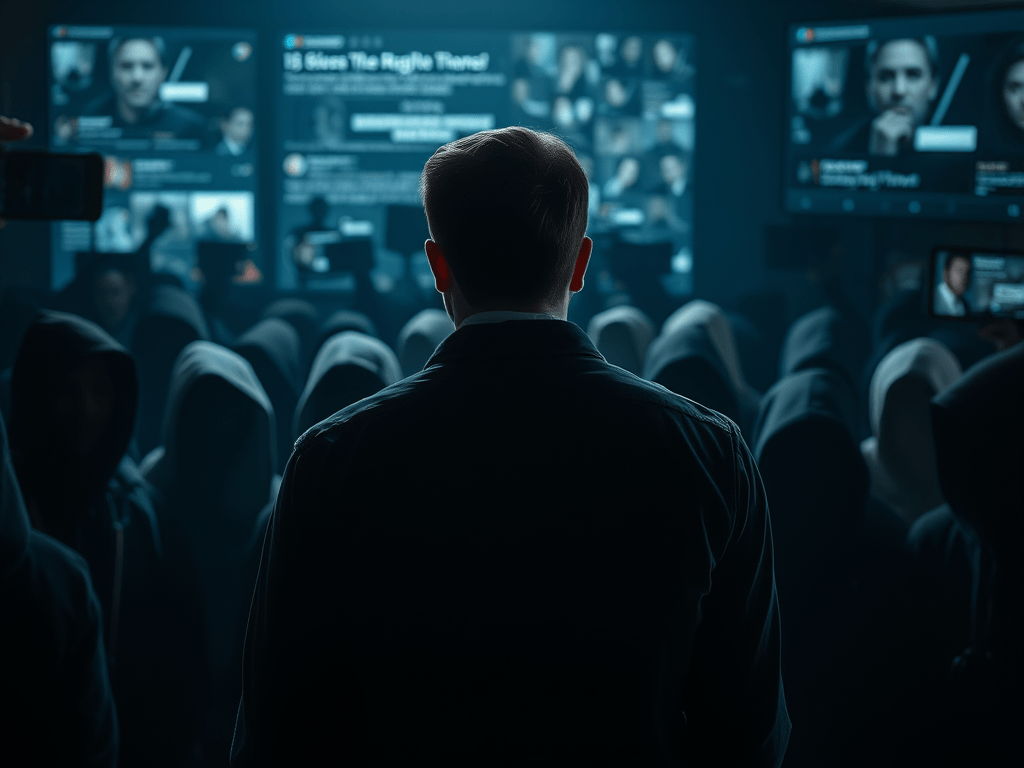
In recent years, the United States has faced a disturbing surge in threats directed at its most visible public figures. Politicians, celebrities, and athletes—individuals who embody influence, leadership, or cultural importance—are increasingly targeted by extremist groups, cult-like organizations, and vigilante movements. This troubling trend not only endangers individual lives but also poses a broader threat to national security.
Rising Threats Against U.S. Public Figures Raise National Security Concerns
Washington, D.C. — Politicians, celebrities, and athletes in the United States are facing increasing levels of danger as extremist groups, cult-like organizations, and vigilante gatherings escalate their threats. Security experts warn that the trend represents not only a personal risk to high-profile individuals but also a potential threat to national security.
Surge in Threats
According to the U.S. Capitol Police, threats against members of Congress have risen sharply in recent years, with several thousand cases reported annually. The Department of Homeland Security (DHS) has also identified domestic violent extremism as one of the nation’s most persistent and lethal threats. Public figures, given their visibility and influence, are among the most common targets.
Extremist and Cult Activity
Federal reports note that extremist organizations often frame political leaders, entertainers, and athletes as symbolic enemies. Analysts explain that such groups use high-profile figures to rally supporters, portraying them as representatives of the institutions or values the groups oppose. In some cases, fringe religious or cult movements have also been linked to direct threats, singling out individuals who hold cultural significance.
Vigilante Movements
Beyond organized extremist networks, law enforcement has documented the rise of loosely coordinated vigilante gatherings. Unlike structured groups, these movements often emerge spontaneously, fueled by misinformation and online conspiracy theories. Officials caution that their lack of centralized leadership makes them difficult to monitor and predict, increasing the risk of sudden violence at political rallies, sporting events, or public appearances.
National Security Implications
Security specialists emphasize that attacks on public figures can reverberate far beyond the individual target. Political violence can disrupt democratic institutions and legislative processes, while incidents involving athletes or entertainers could destabilize major cultural or economic events. “These threats are not just about personal safety,” one DHS official said. “They carry the potential to shake public confidence in national stability.”
Government Response
To address the rising dangers, federal and state agencies have increased intelligence-sharing and protective measures. The U.S. Secret Service, which traditionally focuses on safeguarding national leaders, has expanded its threat assessment protocols, while Capitol Police and private security firms are coordinating more closely with event organizers. Despite these efforts, officials admit that the decentralized nature of modern extremism poses significant challenges.
Outlook
Experts agree that the combination of political polarization, disinformation, and social media amplification is likely to keep public figures at heightened risk. National security analysts warn that without a comprehensive approach—blending law enforcement vigilance with public awareness campaigns—the threat environment will remain volatile.
Here is a revised news-style, objective report with citations to official data and recent incidents:
Surge in Threats to U.S. Public Figures Raises National Security Concerns
Washington, D.C. — There has been a marked increase in threats against U.S. politicians in recent years, with data and expert analysis showing that members of Congress, their families, and staff are facing increasingly frequent and varied threats. Law enforcement and homeland security agencies warn that this trend may have broader implications for democracy, public safety, and national security.
Key Data & Trends
- In 2024, the U.S. Capitol Police (USCP) Threat Assessment Section investigated 9,474 concerning statements and direct threats against members of Congress, their families, and staff. (U.S. Capitol Police)
- That is up from 8,008 investigations in 2023, showing a rising trajectory. (Axios)
- The 2024 figure is nearly three times higher than in 2017, when there were about 3,939 threat cases. (Spectrum News 1)
Examples & Incident Types
- Swatting threats (false emergency calls intended to provoke a large police response) are increasingly being used against members of Congress. In 2024, at least two foreign nationals were charged in connection with dozens of swatting incidents targeting lawmakers. (CBS News)
- In one recent month, more than 700 threats were made against members of Congress, including false emergency calls to law enforcement to respond to their homes (“swatting”), according to U.S. Capitol Police Chief Thomas Manger. (Louisiana Illuminator)
- Alongside direct threats, officials report that threats tend to spike during periods of heightened political tension — for example around contentious votes, geographic conflict settings, or around mass media events. (Axios)
Threat Landscape & Government Findings
- The Department of Homeland Security’s Homeland Threat Assessment (2025) lists domestic violent extremism (DVE) as among the evolving threats confronting homeland security, especially in contexts where fringe ideologies or conspiratorial beliefs gain traction. (U.S. Department of Homeland Security)
- The Government Accountability Office (GAO) has noted that both the FBI and DHS are increasingly dealing with threats propagated via social media, gaming platforms, and other online forums, which are used for radicalization, recruitment, and mobilization of domestic violent extremists. (Government Accountability Office)
- A Congressional Research Service report from December 2023 outlines how U.S. federal law defines domestic terrorism—ideologically motivated violence within the country—and discusses challenges in preventing and responding to such threats. (Congress.gov)
National Security Implications
- The rise in threats against public officials is seen as not only a personal safety issue but also a potential risk to democratic processes. High-profile attacks or disruptive incidents can erode public confidence and disrupt governance.
- Security experts warn that decentralized threat actors (e.g. those acting independently but motivated by extremist ideology) are harder to detect and prevent, especially when they leverage online radicalization. Government agencies acknowledge gaps in threat-sharing, monitoring, and resources. (Government Accountability Office)
Current Response & Assessment
- The USCP has expanded its intelligence and threat assessment operations, including the establishment of a Protective Intelligence Operations Center to better manage and prioritize threat reports. (U.S. Capitol Police)
- DHS has emphasized grant programs and partnerships under its Center for Prevention Programs and Partnerships (CP3), aimed at supporting local and regional capacity to recognize, report, and respond to targeted violence and extremism. (U.S. Department of Homeland Security)
- GAO has recommended that DHS and FBI develop clearer strategies and measurable goals for engagement with social media and gaming companies to better monitor and counteract violent extremist content. (Government Accountability Office)
Gaps & Uncertainties
- While threats have increased, conviction rates for those making threats remain low. Law enforcement often faces difficulties in attribution, jurisdiction, or determining credibility of threats.
- There is limited publicly available data on threats against celebrities, athletes, or non-political public figures, though media reporting suggests such incidents occur increasingly. More formal studies appear focused mainly on elected officials and government actors.
- Resource limitations — in personnel, funding, and coordination — are repeatedly cited by officials as barriers to fully addressing the threat problem. (Louisiana Illuminator)
Conclusion
The available data show a clear upward trend in threats against U.S. public officials, especially members of Congress. The increasing volume and variety of threats—not just verbal or online but also physical or impersonative (such as swatting)—have raised alarms at multiple levels of government. The public safety and national security risks are compounded by the decentralized nature of many threats, the rapid spread of disinformation via digital platforms, and resource constraints among protective agencies. Strengthening threat-assessment capabilities, improving interagency coordination, and expanding preventive strategies are among the steps called for by experts to avert more serious incidents.
 JAI ON EARTH Discovering Our Planet
Leave a comment