
When I work in areas that do not respect work and labor rules, the Lord Jesus Christ is constantly operating behind the scenes.
Is this place permanently closed? I can believe that. I worked here at the conclusion of my time in Blue Island. JIAO dumplings are actually really good. However, as a former employee, their reputation for discriminating, in the work place, might leave you feeling discriminated against.
I didn’t work here long, but I’ve recognized that when people see my skills and talents at work, they become envious. I could teach them to be wonderful in their own way. When you are incredibly clever, people appear to misinterpret everything what I say or do.
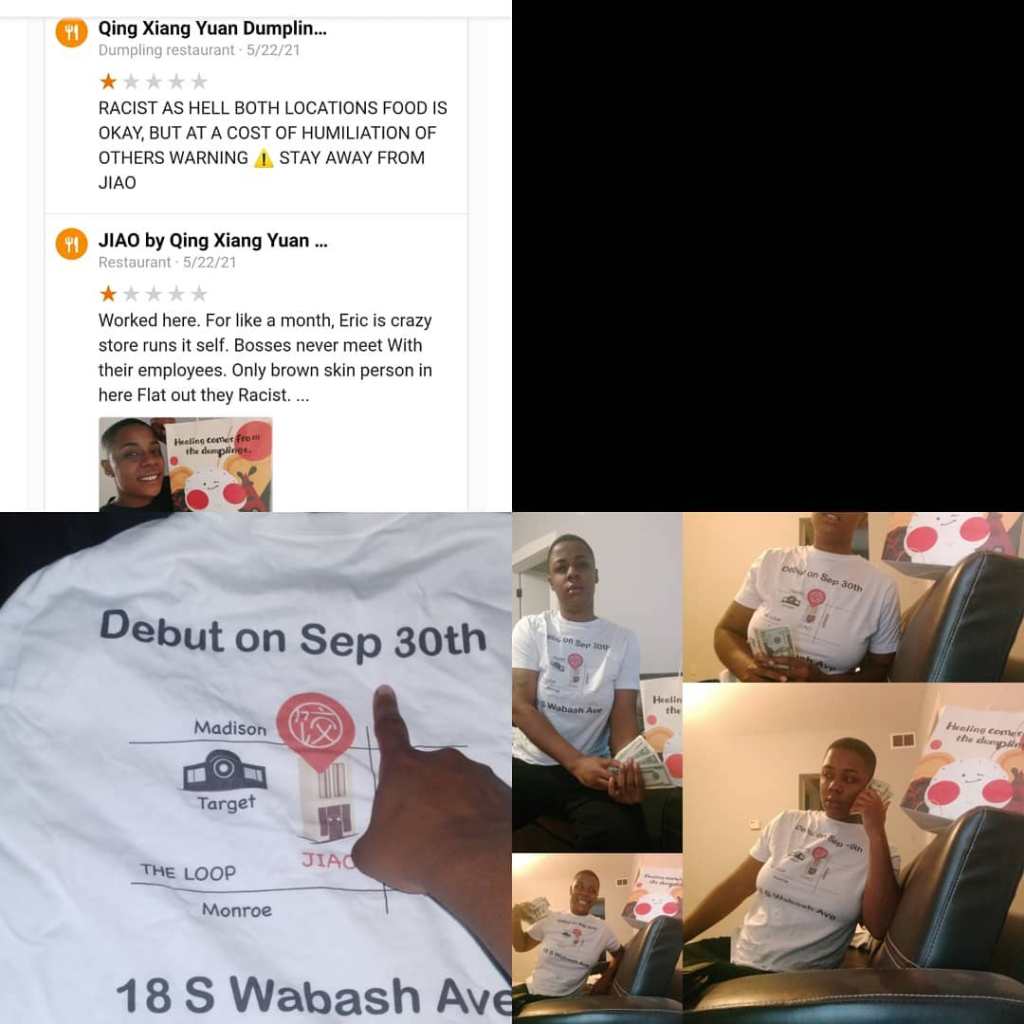
I don’t think I got paid for my last two weeks of work here, and my information was compromised somehow.
Yes, it is possible that I am being targeted in the workplace because they can see my outer wealth, which naturally attracts money to me, so for decades now, men in positions of power have kept me in low positions despite knowing I could do the work, retain information quickly, and complete the job. Even when I alter and adapt to better myself, others would rather watch me suffer and struggle than succeed..
The practice of some Asians preferring to hire family members or individuals within their own ethnic or cultural group over non-minorities can be attributed to a variety of social, cultural, and economic factors. It’s important to note that these practices are not universal across all Asian communities, but can be observed in certain contexts or regions. Here are five reasons why this might occur:
1. Trust and Loyalty
In many cultures, family is seen as a core support system, and trust is a key value. When hiring, individuals might prefer family members because they trust them more to uphold values like loyalty, respect, and a strong work ethic. The assumption is that family members will be more dependable and less likely to betray trust or mismanage the business.
2. Cultural Norms and Close-Knit Communities
In some Asian cultures, there is a strong emphasis on preserving and nurturing community ties. This can extend to business practices, where hiring family members or people from the same ethnic background helps reinforce community cohesion and mutual support. It’s a way of ensuring that resources and opportunities stay within the community, which can be seen as a form of social solidarity.
3. Language and Communication
In many cases, language and cultural barriers can play a role. Hiring someone from within the same ethnic or cultural background ensures better communication, understanding of cultural nuances, and smoother day-to-day interactions. A shared language can make business transactions more efficient and reduce the chance of misunderstandings.
4. Generational Wealth and Business Continuity
In some Asian communities, businesses are often family-owned and passed down through generations. Keeping the business in the family helps maintain generational wealth and ensures that the business culture, values, and skills are preserved. Hiring outside the family, particularly non-minorities, might be seen as a risk to the continuity of these traditions.
5. Economic Security and Social Safety Net
In some cases, hiring family members can be seen as a way to ensure economic security within the family. It can provide a financial safety net for relatives, especially in immigrant communities, where job opportunities outside the family network might be scarce or harder to come by. By hiring family members, businesses can provide economic stability while also offering a sense of belonging and support within the community.
These reasons, while understandable from a cultural and social perspective, can sometimes lead to criticisms of exclusion or lack of diversity in certain workplaces. However, it’s important to recognize that these practices are often shaped by a combination of history, cultural values, and practical considerations, rather than an inherent bias against outsiders or non-minorities.
 JAI ON EARTH Discovering Our Planet
Leave a comment