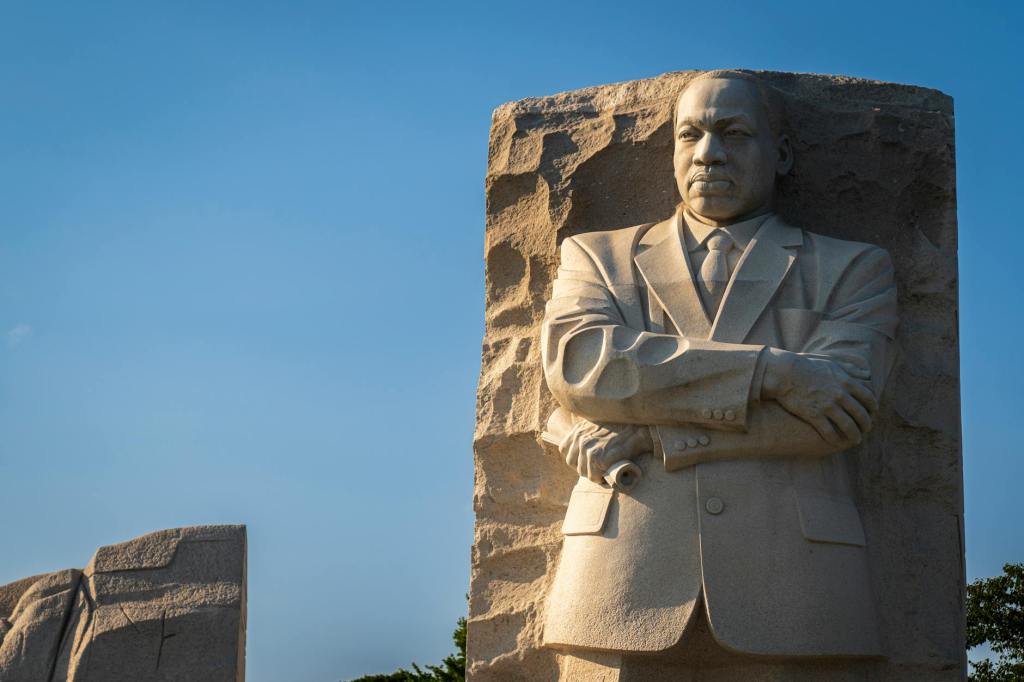
In a world still shaken by division, conflict, and social unrest, the call to celebrate world peace is more than a symbolic gesture — it is a necessity. Peace is not passive. It is active, deliberate, and often courageous. It demands participation. It requires communities to look inward, reconcile differences, and build bridges where walls once stood. For African Americans in particular, the pursuit of peace carries deep historical meaning — rooted in resilience, justice, and transformative leadership.
Few figures embody the spirit of peaceful change more than Martin Luther King Jr.. Dr. King’s philosophy of nonviolent resistance reshaped the American conscience. Inspired by Christian teachings and Mahatma Gandhi’s methods, he led peaceful protests such as the Montgomery Bus Boycott and the March on Washington, where he delivered his historic “I Have a Dream” speech. King believed that hate could not drive out hate — only love could do that. He taught that violence, even in response to injustice, ultimately deepens wounds rather than heals them.
Dr. King’s work was not about passive acceptance. It was about organized, strategic, peaceful resistance. Through sit-ins, boycotts, and marches, he demonstrated that unity and discipline could dismantle systems of oppression. His efforts contributed directly to the Civil Rights Act of 1964 and the Voting Rights Act of 1965. Celebrating world peace means honoring this legacy — not just remembering his words once a year, but embodying them in daily life.
Alongside King stood another powerful and evolving voice: Malcolm X. Often portrayed simply as militant in contrast to King’s nonviolence, Malcolm X’s journey was far more nuanced. In his early years as a minister for the Nation of Islam, he advocated Black self-reliance, pride, and self-defense in the face of brutality. He challenged African Americans to reclaim their identity and reject narratives of inferiority.
Later in his life, after his pilgrimage to Mecca, Malcolm X’s perspective broadened. He began emphasizing global human rights and interracial solidarity. He recognized the power of unity beyond borders and softened his stance on racial separation. His evolution illustrates an essential truth: peace is not static. It grows as we grow. His message of empowerment and accountability remains vital today.
For African Americans, coming together to stop violence and hate begins within communities. It starts with mentoring young people, supporting Black-owned businesses, investing in education, and fostering safe spaces for dialogue. Community-led initiatives, faith-based organizations, and grassroots movements can redirect energy from conflict to collaboration. Addressing violence requires tackling root causes — poverty, lack of opportunity, trauma, and systemic inequality — rather than merely reacting to symptoms.
Celebrating world peace also means rejecting internalized divisions. Social media conflicts, neighborhood rivalries, and ideological splits weaken collective strength. Unity does not require uniformity; it requires shared commitment to uplift one another. When communities prioritize conflict resolution, mental health support, and restorative justice, cycles of harm can be broken.
Peace is powerful because it multiplies. When African American communities model unity and nonviolence, it sends a broader message to the nation and the world. It reinforces a legacy of courage that stretches from the Civil Rights Movement to modern social justice activism.
World peace begins locally — in homes, schools, churches, and community centers. It thrives when people choose empathy over anger, dialogue over destruction, and cooperation over chaos. By drawing from the wisdom of Dr. King’s nonviolence and Malcolm X’s call for dignity and self-determination, African Americans can continue shaping a future rooted not in hate, but in hope.
Celebrating world peace is not about ignoring struggle. It is about committing to overcome it — together.
 JAI ON EARTH Discovering Our Planet
Leave a comment