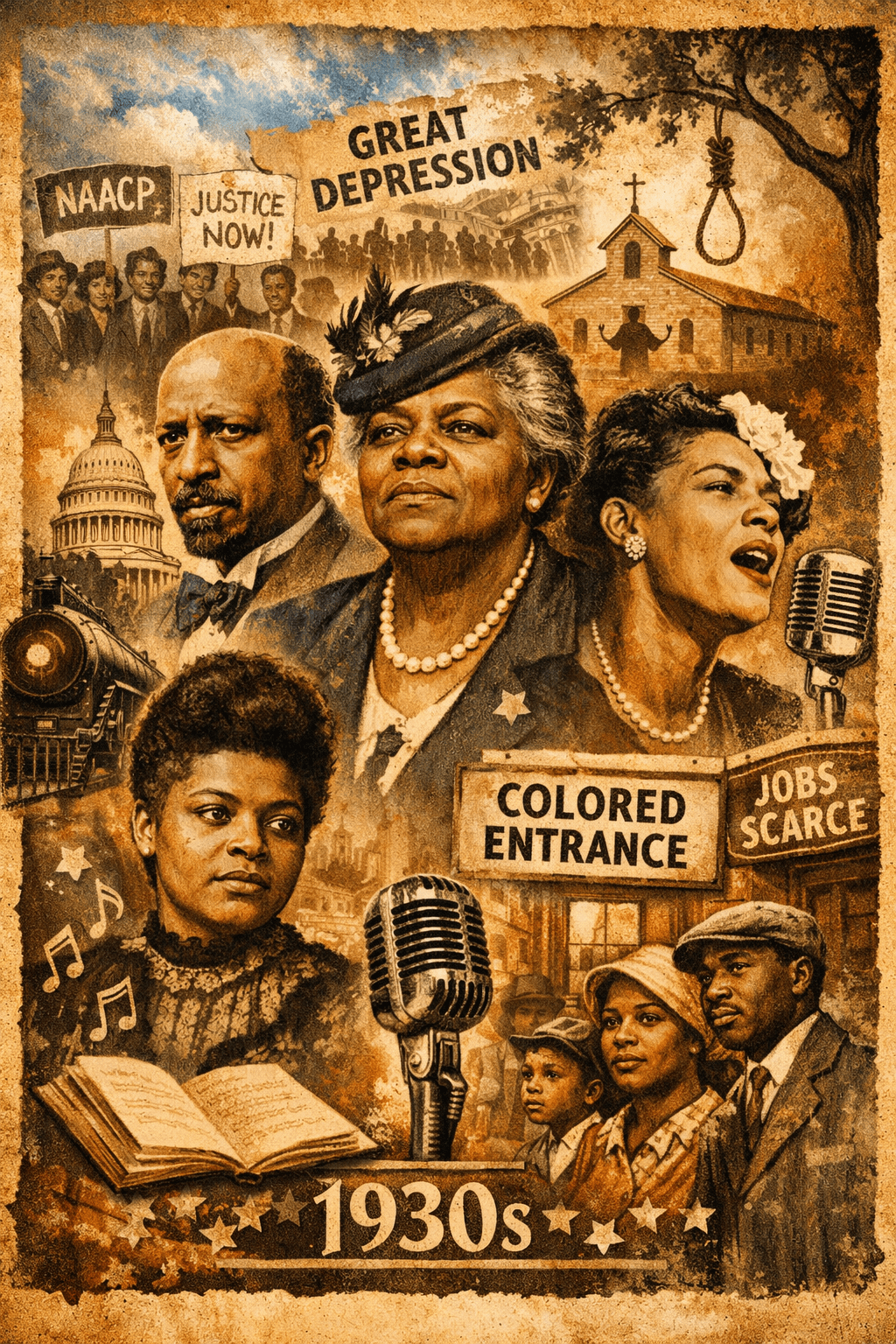
The 1930s were marked by economic collapse, racial injustice, and social instability. The Great Depression devastated millions of Americans — and African American communities were hit especially hard due to segregation, limited job access, and systemic discrimination.
Yet in the face of intense hardship, Black leaders emerged not only as political and cultural forces, but as symbols of emotional resilience. Though the term “mental health” was rarely used at the time, the psychological weight of racism, poverty, and national crisis was deeply felt.
Let’s explore how prominent African American leaders of the 1930s navigated emotional strain — and how their experiences shaped a powerful legacy of strength and advocacy.
🧠 Mental Wellness in the 1930s: The Silent Struggle
In the early 20th century:
- Mental health treatment was limited and often inaccessible to Black Americans.
- Racial bias heavily influenced medical systems.
- Emotional distress was frequently stigmatized.
- Community support, faith institutions, and family networks served as primary coping systems.
Psychological stressors during this time included:
- Economic instability
- Lynching and racial violence
- Segregation under Jim Crow laws
- Social exclusion and political disenfranchisement
Against this backdrop, Black leaders carried both personal burdens and the responsibility of representing hope for millions.
🌟 Leaders Who Carried the Weight — and Kept Moving Forward
🗣️ Mary McLeod Bethune
An educator and advisor to President Franklin D. Roosevelt, Mary McLeod Bethune founded the National Council of Negro Women in 1935. As one of the highest-ranking Black women in government at the time, she faced enormous pressure navigating both racial and gender barriers.
Historical accounts describe her tireless work schedule and constant advocacy in hostile political environments. The emotional toll of fighting systemic inequality while mentoring young Black women required extraordinary resilience. She leaned heavily on faith, education, and community-building as tools for emotional strength.
Her life reminds us that leadership often requires managing both external battles and internal fatigue.
📚 W. E. B. Du Bois
Scholar, co-founder of the NAACP, and outspoken critic of racial injustice, W.E.B. Du Bois spent the 1930s wrestling with ideological conflicts, public criticism, and professional isolation.
Letters and journals from this period reveal periods of deep frustration and emotional exhaustion. He often felt alienated within political movements and academia. Yet he continued writing, teaching, and advocating for global Black liberation.
His persistence shows that even intellectual giants experience doubt — and that purpose can sustain mental endurance during periods of discouragement.
🎤 Billie Holiday
Though primarily known for her rise in the late 1930s, Billie Holiday’s early career unfolded during intense racial discrimination. Performing in segregated venues and navigating exploitative industry practices placed enormous psychological strain on her.
Her haunting song “Strange Fruit” (1939) confronted racial terror directly — an act of both artistic courage and emotional vulnerability. While she later struggled with substance use, her early career demonstrates how creativity can serve as both expression and coping mechanism.
📰 Ida B. Wells
Though she passed away in 1931, Ida B. Wells entered the decade after a lifetime of anti-lynching activism. She endured threats, exile, and constant danger. Living under the threat of violence produces chronic stress — something modern psychology now recognizes as trauma exposure.
Her sustained activism in the face of personal risk speaks to extraordinary psychological fortitude.
💡 The Hidden Tools of Mental Resilience
Without widespread access to therapy or medication, African American communities in the 1930s relied on:
- Faith and church leadership
- Mutual aid societies
- Music and artistic expression
- Family and extended kin networks
- Collective activism
These weren’t just cultural pillars — they were mental wellness systems.
Modern research now confirms what these communities practiced intuitively:
- Social connection reduces stress hormones.
- Spiritual engagement can improve coping and resilience.
- Creative expression helps process trauma.
🌈 A Legacy of Strength
The 1930s demanded extraordinary mental stamina from African American leaders. They navigated racism, economic crisis, and social hostility — all while building institutions that still shape American society.
Their stories remind us:
- Mental strain does not negate leadership.
- Emotional fatigue and courage can coexist.
- Community is a powerful protective factor.
- Advocacy itself can be a source of healing.
The language of “mental wellness” may be modern, but the practice of resilience has deep historical roots.
And in the lives of these leaders, we see a powerful truth:
Even in the hardest decades, strength can be cultivated, shared, and passed forward. ✊🏾✨

 JAI ON EARTH Discovering Our Planet
Leave a comment