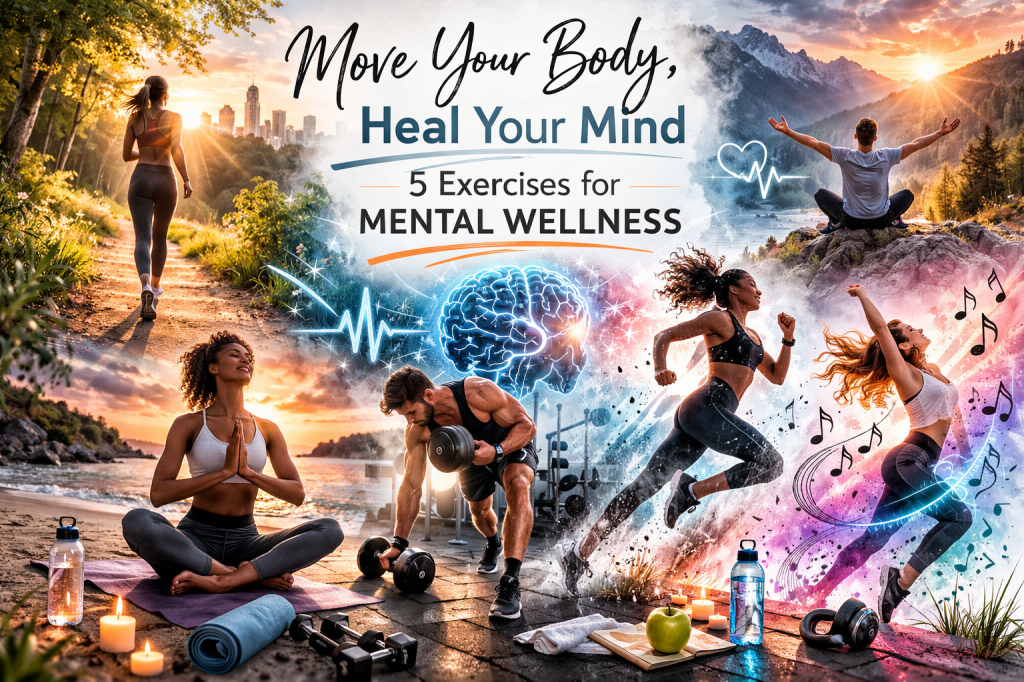
In a world that rarely slows down, mental wellness has become just as essential as physical health. Anxiety, depression, chronic stress, and burnout are no longer fringe conversations — they are part of everyday life. While therapy, medication, and community support are critical tools, one of the most powerful and accessible mental health interventions is often overlooked: movement.
Fitness is not just about aesthetics or athletic performance. It is a biological and psychological reset button. When we move our bodies, we influence brain chemistry, regulate stress hormones, improve sleep, and create structure and accomplishment in our daily lives. Research from institutions like the American Psychological Association and the National Institute of Mental Health consistently shows that regular exercise can reduce symptoms of depression and anxiety while improving overall mood and cognitive function.
Here are five exercises that stand out for their impact on mental wellness — and why they work.
1. Walking: The Underrated Mood Stabilizer
Never underestimate the power of a simple walk.
Walking, especially outdoors, combines rhythmic movement with environmental stimulation. Studies have shown that just 20–30 minutes of brisk walking can significantly lower cortisol levels (the body’s primary stress hormone). When done in green spaces, it also reduces rumination — the repetitive negative thought cycles often associated with anxiety and depression.
Physiologically, walking increases blood flow to the brain and stimulates the release of endorphins and serotonin. Psychologically, it creates forward motion. That forward movement can feel symbolic — you are literally moving through stress instead of sitting in it.
For individuals dealing with mild depression or chronic stress, walking offers something critical: accessibility. No gym membership required. No equipment. Just shoes and consistency.
2. Strength Training: Building More Than Muscle
Lifting weights doesn’t just reshape your body — it reshapes your resilience.
Strength training has been shown to reduce symptoms of depression at levels comparable to other structured interventions. When you lift, your body releases dopamine, the neurotransmitter associated with motivation and reward. Over time, the act of progressively increasing resistance builds a sense of mastery and self-efficacy.
Mental illness often comes with feelings of helplessness or lack of control. Strength training counters that directly. You choose the weight. You complete the rep. You track improvement.
There’s also a neurochemical advantage. Resistance training increases brain-derived neurotrophic factor (BDNF), a protein linked to improved cognitive function and reduced depressive symptoms. In simple terms: lifting helps your brain grow stronger along with your body.
3. Yoga: Nervous System Regulation in Motion
If stress is a fire, yoga is water.
Yoga uniquely blends physical movement, breath control, and mindfulness. This combination activates the parasympathetic nervous system — the “rest and digest” mode that counterbalances the fight-or-flight response.
Many mental health challenges are rooted in chronic nervous system dysregulation. Trauma, anxiety disorders, and high stress levels keep the body in a constant state of alert. Yoga helps retrain the system.
Controlled breathing techniques, such as diaphragmatic breathing, directly influence the vagus nerve, which plays a key role in emotional regulation. Research has found that consistent yoga practice can reduce symptoms of PTSD, anxiety, and major depressive disorder.
Unlike high-intensity workouts, yoga invites presence. It asks you to notice sensation without judgment — a skill that transfers directly into emotional resilience.
4. High-Intensity Interval Training (HIIT): The Endorphin Surge
For some, mental clarity comes through intensity.
High-Intensity Interval Training (HIIT) alternates short bursts of intense activity with recovery periods. This format creates a powerful endorphin release — often referred to as the “runner’s high.” Endorphins are natural painkillers and mood elevators.
Beyond chemistry, HIIT provides psychological catharsis. Punching through a tough interval, sprinting hard, or pushing through fatigue can feel like releasing stored stress physically. There’s a sharp mental clarity that follows.
HIIT also improves insulin sensitivity and cardiovascular health, both of which are linked to brain health. Emerging research suggests metabolic health plays a larger role in mental health than previously understood.
The key is moderation. For individuals with severe anxiety, overly intense workouts can temporarily elevate stress hormones. The balance lies in using intensity strategically — not excessively.
5. Dance: Joy as Therapy
Sometimes the best medicine is play.
Dance combines cardiovascular movement, music, rhythm, and creative expression. That combination is neurologically powerful. Music alone activates multiple areas of the brain associated with memory, emotion, and reward. Add movement, and you amplify the effect.
Dance has been shown to reduce depressive symptoms and improve social connection — a critical factor in mental wellness. Group dance classes, in particular, combat isolation, which is one of the strongest predictors of worsening mental health outcomes.
There is also something uniquely freeing about expressive movement. Unlike structured exercise, dance allows emotion to move through the body. Anger, joy, sadness, excitement — all can be processed through rhythm.
For those who struggle with traditional workouts, dance offers permission to enjoy movement without performance pressure.
How Fitness Supports Mental Illness Recovery
Exercise is not a replacement for therapy or medication when clinically necessary. But it is a potent complementary tool.
Here’s why:
- Neurochemical Regulation: Exercise increases serotonin, dopamine, and norepinephrine — neurotransmitters targeted by many antidepressants.
- Stress Reduction: Physical activity lowers cortisol and adrenaline levels over time.
- Sleep Improvement: Regular movement improves sleep quality, and sleep is foundational to emotional regulation.
- Cognitive Clarity: Increased blood flow enhances executive function, focus, and memory.
- Identity Shift: Adopting a fitness routine builds a narrative of capability rather than limitation.
Perhaps most importantly, exercise introduces routine. Mental illness often disrupts structure. A consistent workout schedule provides predictability — and predictability can feel safe.
The Bigger Picture
Mental wellness is not built in a single workout. It is shaped through repetition, self-compassion, and sustainable habits.
You don’t need to train like an athlete. You need to move consistently enough to signal to your brain that you are active, capable, and engaged with life.
In a culture that glamorizes hustle and productivity, movement can become something deeper: a daily act of self-respect.
The body and mind are not separate systems. They are one conversation.
And every time you choose to move, you are telling your brain a powerful story — one of strength, adaptability, and hope.
 JAI ON EARTH Discovering Our Planet
Leave a comment